
When Advisors Don’t Coordinate Costly Friction Compounds
Conflicting advice confuses decisions, and time is wasted managing the fallout.
For Eight-Figure Business Owners
Siege integrates your advisory network before decisions collide. Tax, legal, risk, and capital guidance move forward without friction.
I'm grateful. You went above and beyond what I thought would be the scope of service. You went the extra mile on so many occasions.
★★★★★
Your Time is Returned Decisions Get Easier Advice Arrives Fully Aligned
Decisions Get Easier Advice Arrives Fully Aligned
Conflicted advice shows up more often than you'd like.
Conflicts don’t look like problems unless they continually repeat.
They show up across different decisions. You prepare. You plan. You meet.
They happen with different advisors involved. Alignment is knocking on the door.
They repeat even when the stakes change. Clarity is delayed. Momentum slows.
Each situation feels separate. Progress stutters with friction.
Yet, over time, the conflicts quietly compound. Your advisory network breaks.
You're Not Imagining Things
Managing Siloed Advisors Steals Your Time and Attention
The Problem Isn't the Conflicts. It's What Causes Them.
The problem is that no one integrates their recommendations into a governing direction before they reach you. Your advisors are doing their jobs well inside their own domain. This means no one is accountable for how their advice fits together. That isn’t a failure of expertise. It’s the absence of a system designed to integrate decisions across domains.
Over time, this creates a repeating pattern. Decisions in one domain quietly affect another. Without integration, those interactions surface as conflict later.
Because there is no one to integrate conflicting counsel, the burden falls on you. You become the clearinghouse for conflicts. You are the arbiter between professionals with competing priorities. And the final checkpoint for reconciliations is resolved upstream. Progress slows not because decisions are difficult, but because they arrive fragmented.
This is why the same conflicts keep resurfacing across different decisions. The details change, but the friction remains. Without a unified plan disagreement is inevitable. Momentum erodes quietly over time.
The issue is not bad advice. It is the absence of leadership over how advice is integrated before it reaches you.
Discord Isn't The Real Problem




You should not have to reconcile competing recommendations or mediate disagreements between professional advisors.
Yet this is exactly where many business owners lose time every month. Conflicts surface across different decisions, with different advisors, at different moments. Each instance feels manageable on its own. Over time, they accumulate.
Decisions stall. Execution slows. Strategies that should move cleanly instead, drag through revisions, second opinions, and unresolved conflicts. Momentum erodes quietly, even when each decision seems reasonable on its own.
This is more common than most owners realize.
As friction repeats, the consequences compound. Higher taxes. Missed opportunities. Unnecessary exposure. Not because the advice is bad, but because it arrives fragmented rather than aligned.
The issue is rarely incompetence. It is a systems failure. Each advisor operates correctly within their own silo. They are focused on their own domain. They have no mandate to ensure their guidance aligns with every other advisor. There is too much daylight between them. No one is responsible for how recommendations intersect before they reach you.
Because no one owns that integration, the burden shifts to the business owner. Time and attention are pulled away from running the business. It is redirected toward arbitrating between professionals who operate independently. No structure requires their advice to be integrated. What should have been resolved upstream arrives on your desk unresolved.
Without a system to integrate advice across domains, the same conflicts resurface again and again. The details change. The friction remains. Progress slows not because decisions are complex, but because they arrive disconnected.
What Changes When Advisors Are Integrated
The Siege Group removes this burden by addressing the friction at the source, before it compounds.
We begin by mapping the full advisory network. Every advisor and every domain.
Where decisions overlap
Where guidance intersects.
Where domain conflicts tend to repeat.
This makes the pattern visible and stops issues from resurfacing one decision at a time.
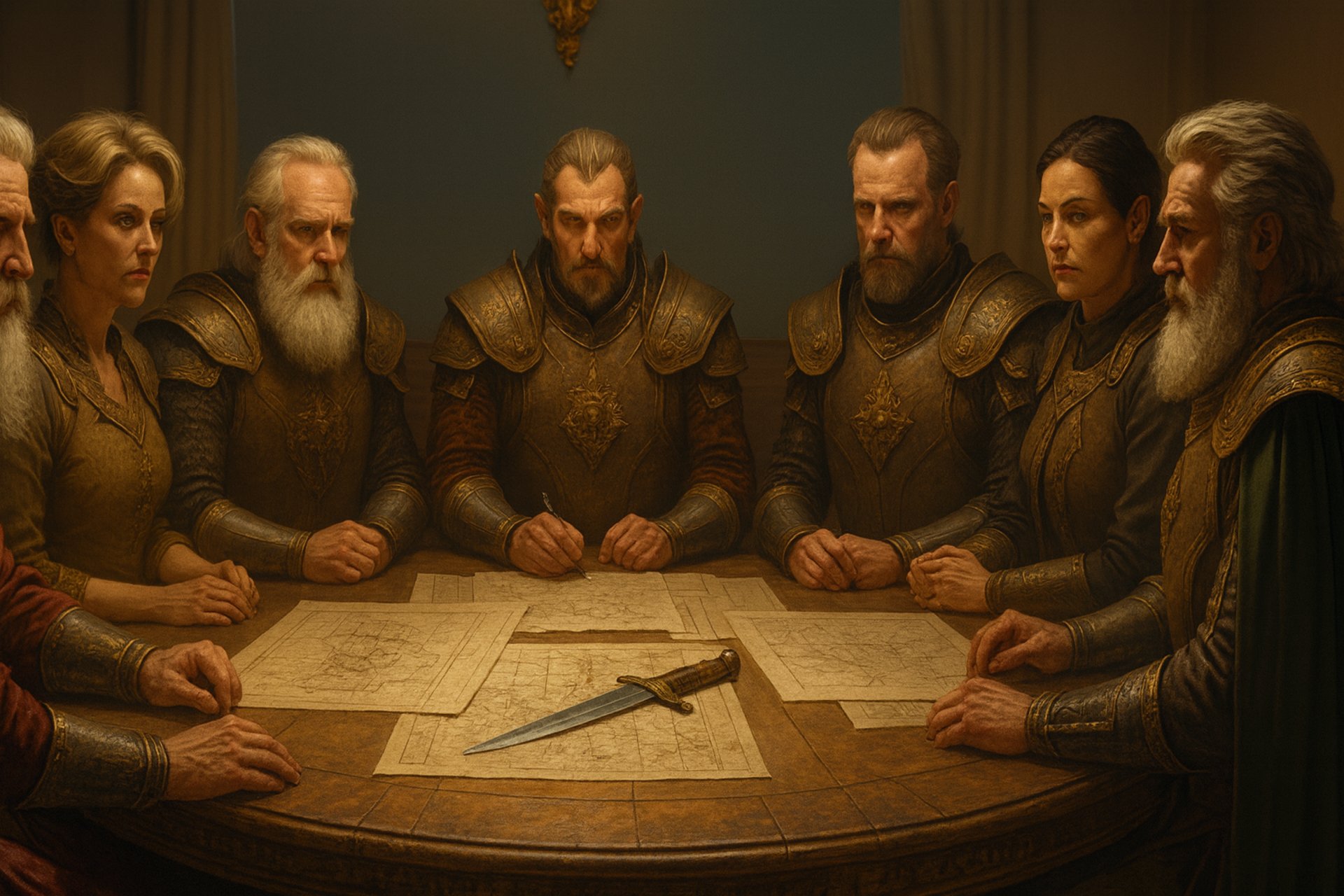
Next, we integrate those advisors upstream, before recommendations reach you. Tax, legal, risk, and capital guidance are aligned inside a unified strike force we call a War Council. Conflicts are resolved once, in context, rather than repeatedly inside each silo. Advice is coordinated before execution ever begins.
Because alignment happens upstream, decisions stop stalling. Execution moves forward without friction. Strategies no longer drag through revisions or second opinions because the intersections have already been addressed.
As coordination improves, second-order consequences decline. Taxes, risk, and missed opportunities stop compounding through disconnection.
Most importantly, the burden is lifted from the business owner. You are no longer arbitrating between professionals or reconciling competing recommendations. Responsibility for integration is offloaded entirely.
The outcome is simple.
Time is recovered.
Advice arrives aligned.
Decisions move forward without friction.
The process is straightforward.
We map the advisory network.
We integrate advisors into a War Council.
We deliver aligned recommendations.
Progress resumes with clarity and control.
What You Get Back
You get back time that was being consumed by arbitration, rework, and second-guessing.
You get back control over how decisions are formed, sequenced, and executed.
You get back predictability in outcomes that were previously uncertain and reactive.
When advisors are not integrated, time is lost in ways that are hard to see in the moment. Decisions stall while conflicts are clarified. Execution slows while second opinions are gathered. Attention is pulled away from leading the business. It is redirected toward resolving issues that should have been addressed upstream. Integration removes that drag by eliminating the need to reconcile advice after the fact. The time you recover is not idle time. It is leadership time.
Control is restored when recommendations arrive complete rather than fragmented. Without integration, no one owns how advice intersects, so decisions reach you unresolved. Trade-offs are hidden. Consequences surface later. A War Council restores control by establishing ownership of alignment before decisions are finalized. You are no longer managing the gaps between advisors. You are receiving counsel that reflects the full picture.
Predictability returns when advice is coordinated across domains. Fragmented guidance creates surprises. Missed opportunities. Exposure that only becomes visible after decisions are made. Integrated advice reduces that discord by addressing interactions in advance. Outcomes become more reliable. Not because risk disappears, but because it is understood. Risk is accounted for before execution begins.
Taken together, these changes explain the symptoms you may have felt for years. The stalled decisions. The recurring friction. The sense that progress requires more effort than it should. Those were not isolated issues. They were signals of a fragmented advisory network.
When advisors are integrated, those signals fade. Not because you work harder, but because a unified system is finally in place.
What You Will Lose
What you get from advisory integration is not another layer of advice. You get the removal of friction that quietly drains time, attention, and momentum. When advisors operate within a shared structure, familiar problems stop recurring. Yhat's because the conditions that create them no longer exist. Once the advisory network is integrated these symptoms disappear .
Symptoms that go away
Decisions move forward without cycling through multiple advisor conversations.
Conflicting recommendations stop reaching you without context or resolution.
Opportunities are no longer missed when decisions are made on coordinated information.
Strategies no longer break when combined with integrated counsel.
You no longer wonder whether anyone sees the full picture.